

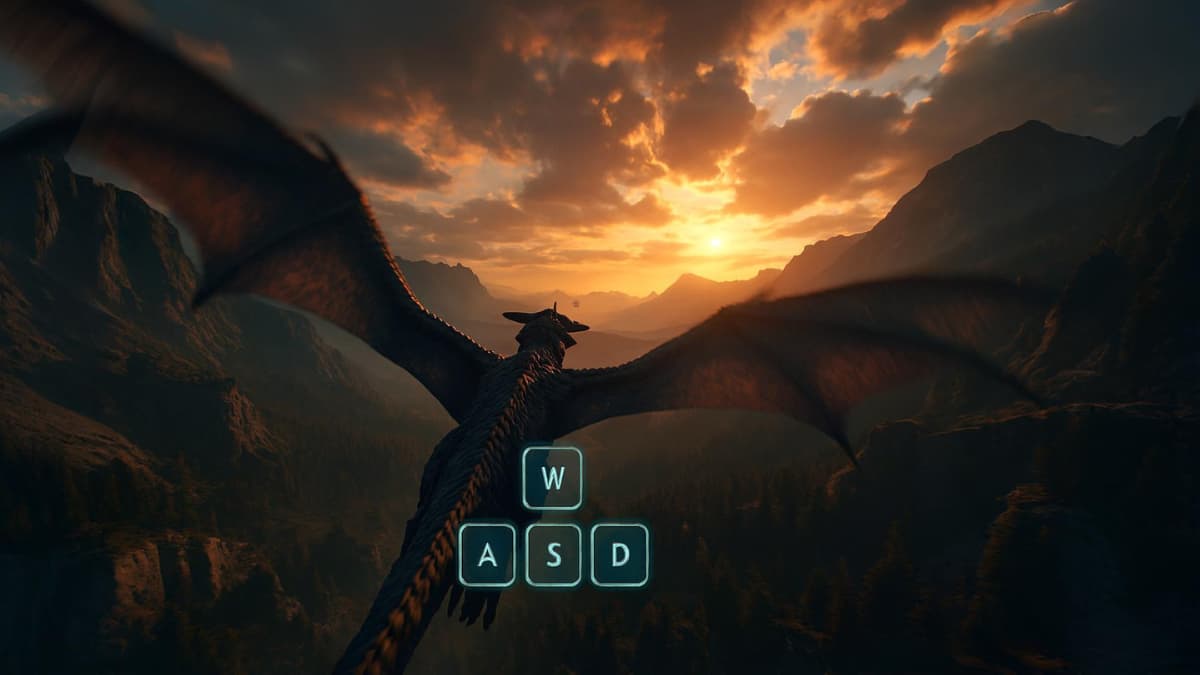

We’ve watched open source absolutely run through video generation, image generation & even audio. Every few months another closed model gets matched & suddenly there’s a competitive open-source alternative on GitHub.
But world generation always felt different. Like that was the one thing that needed a Google-sized lab behind it.
I thought so too, until I actually went looking.
Turns out there are open source models right now that take a text prompt and build you an explorable, interactive world. Some go even further — hand them a single image and they’ll construct an entire environment around it. The quality on a few of these genuinely caught me off guard.
I’ve pulled together the 5 best ones. If you’ve been sleeping on this corner of AI, this is a good place to wake up.
1. LingBot-World
LingBot-World might be the closest thing I’ve seen to an actual open “world model”.
It started as a video generation project, but the team pushed it further. You give it an image and a prompt, and it continues the world. It tries to behave like a space you’re moving through.
What surprised me most was the memory. This model can maintain consistency for up to a minute at 16 FPS, which means objects, lighting, and scene layout don’t fall apart after a few seconds. That’s rare in open projects.
Features of LingBot-World
- Image + prompt to interactive video world generation
- Supports camera pose control for guided exploration
- Maintains scene consistency over longer sequences (minute-level)
- Real-time interactivity with sub-second latency at 16 FPS
- Open-source release under Apache 2.0
Minimum VRAM requirement
Practically, This is not a “runs on your laptop” model.
For full-resolution multi-GPU inference (480p–720p), you’re looking at high-end setups with multiple GPUs. If you’re running the 4-bit quantized version, you can lower the barrier, but you’ll still want a strong GPU with at least 16–24GB VRAM to experiment comfortably.
If you don’t have serious CUDA memory, you’ll need to reduce frame length or offload parts to CPU.
2. Yume 1.5
Yume is trying to build a controllable world model. You can start from a text description, a single image, and even inject new events mid-generation using text. That last part is what separates it from most open video models.
It uses joint temporal–spatial–channel modeling (TSCM) with linear attention, which basically means it can generate longer sequences without the memory blowing up or the scene collapsing after a few seconds.
And yes! you actually move with WASD controls. It converts real-world camera trajectories into keyboard-style inputs, so exploration feels closer to navigating a space.
Features of Yume 1.5
- Text-to-world generation from a single prompt
- Image-to-world generation from one static image
- Text-based event editing (inject new actions into an existing world)
- Long-context generation with improved scene continuity
- Real-time acceleration using streaming inference
- Windows one-click web demo support
- Available in 5B (720p) and 14B (540p) variants
Minimum VRAM requirement
This is more accessible than some research-only models, but still serious.
- Tested successfully on an RTX 4090 Laptop GPU (16GB)
- Recommended: 16GB VRAM minimum
- Higher sampling steps (4–50 range) improve quality but slow generation
For training, it’s a completely different story, you’re looking at multi-A100 setups (16 GPUs). But for inference and experimentation, a strong 16GB consumer GPU can run it.
3. HunYuanWorld 1.5
I have to say this straight, This is not just impressive. It’s probably the closest open-source alternative to Google’s Genie-style world models right now.
Tencent’s HY-World 1.5 (WorldPlay) is a full framework for real-time, interactive world modeling with long-term geometric consistency.
Earlier world models could generate immersive scenes, but they either weren’t real-time or lost consistency over time
HY-World 1.5 fixes that. It generates streaming video at 24 FPS, responds to keyboard and mouse input, and maintains geometry over long horizons.
The system is built around four major ideas:
- Dual Action Representation – responds cleanly to keyboard + mouse inputs
- Reconstituted Context Memory – rebuilds memory from past frames to preserve geometry
- WorldCompass (RL post-training) – improves action-following and visual quality
- Context Forcing (distillation method) – keeps long-range memory intact while speeding up inference
It predicts video in chunks (16 frames at a time), constantly rebuilding context so long-term structure stays stable.
Features of HY-World 1.5
- Real-time interactive generation (up to 24 FPS)
- Image-to-world and text-to-world support
- Long-term geometric consistency
- First-person and third-person perspectives
- Camera trajectory control via pose strings (WASD-style commands)
- Distilled fast-inference version (4-step sampling)
- Open-sourced training framework + checkpoints
There are two pipelines:
- HunyuanVideo-based (8B backbone) → stronger memory + action control
- WAN-based (5B backbone) → lower VRAM, lighter but slightly weaker
Minimum VRAM requirement
This model is powerful and it needs more hardware.
- Light inference (distilled model): around 28–34GB VRAM
- Full-quality inference can go up to 70GB+ VRAM
- Training, roughly 60GB+ VRAM
If you’re on a standard 12–16GB GPU, this won’t run properly unless you switch to the lighter WAN version (with reduced quality). But compared to closed models, the fact that this is even downloadable is huge.
Related: Best Industry-Grade Open-Source Video Models That Look Scarily Realistic
4. Matrix Game 2.0
Matrix-Game 2.0 is the one I’d point you to if your goal is to generate game-like worlds that actually feel playable.
It uses few-step autoregressive diffusion, which is why it can run at around 25 FPS. That’s fast enough to feel responsive.
What really matters, though, is the training data. They built a data pipeline using Unreal Engine and Grand Theft Auto V and generated roughly 1200 hours of gameplay-style footage with action labels attached.
So when you press W or move the mouse, the model isn’t guessing what “forward movement vibes” look like. It was trained on actual keyboard and mouse inputs tied to visual outcomes.
Is it perfect? No. You can still spot artifacts. But if what you want is something closer to “AI game simulation” instead of “AI cinematic camera pan,” Matrix-Game 2.0 is a solid one.
Features of Matrix Game 2.0
- Runs in real time at around 25 FPS
- Uses few-step autoregressive diffusion (faster than heavy multi-step setups)
- Trained on ~1200 hours of gameplay data from Unreal Engine and GTA V
- Supports frame-level keyboard and mouse input
- Works across different game styles (Minecraft-like, GTA-style, runner environments)
- Open-source weights and code available
Minimum VRAM requirements
This one is more reasonable than the big research models, but it still needs a strong GPU.
- Recommended: 24GB VRAM for smooth real-time generation
- Lower VRAM cards may run it, but expect slower speeds or reduced settings
It’s much more accessible than 60–70GB world models, but still not built for entry-level GPUs.
5. NVIDIA Cosmos-Predict 2.5
This one comes from NVIDIA, and it’s built for physical AI like Real-world systems including robots, autonomous vehicles, multi-camera setups.
So if you’re more into robotics or AV research than game-style exploration, this is probably the model you care about.
It can take text, images, or video and predict what happens next in video form. It unifies Text2World, Image2World, and Video2World into one system. There are smaller 2B models and larger 14B ones, with specialized versions for:
- Autonomous driving (multi-camera views)
- Robot action-conditioned generation
- Multiview robotics setups
It’s more about “simulate the next few seconds of a robot task correctly.”
Features of Cosmos-Predict 2.5
- Text + image + video → future world prediction
- Built specifically for robotics and autonomous systems
- 2B and 14B base checkpoints
- Specialized AV and robot action-conditioned models
- Supports multi-camera inputs
- Distilled lightweight versions available
Minimum VRAM requirements
This depends heavily on which version you use.
- 2B models → workable on high-end consumer GPUs (24GB recommended)
- 14B models → workstation-class GPUs required
- Robotics / multiview setups → expect higher memory use
This isn’t the most casual-friendly model on the list, but if your focus is robotics simulation or physical AI research, Cosmos makes more sense than game-focused world models.
Wrapping Up
Not long ago, interactive world models felt locked behind big tech labs and private demos. Now? Open source is catching up fast.
You’ve got models that can turn a simple prompt into a playable-style environment. Others can take an image and expand it into a living, moving world. And then there are more serious systems like NVIDIA Cosmos, built for robotics and real-world simulation.
Some tools are made for creators and indie devs experimenting with AI worlds.
Some are built for researchers pushing physical AI forward.