

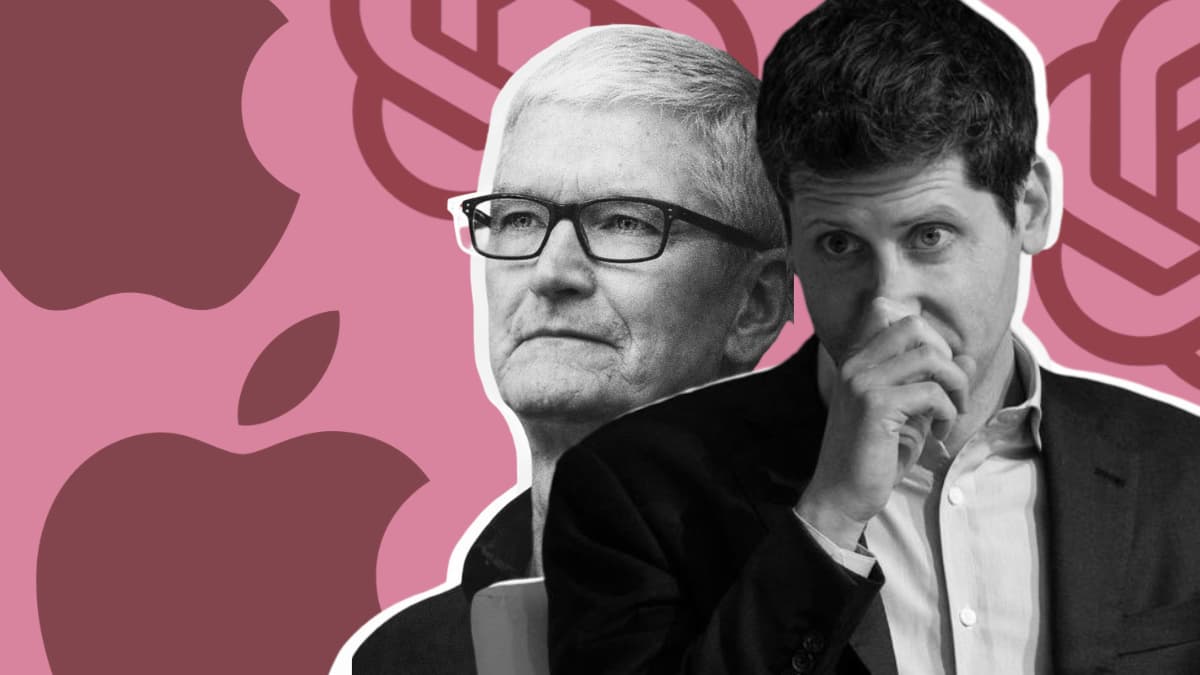

Last year, OpenAI acquired io, Jony Ive’s hardware startup, for $6.5 billion. The deal was widely read as OpenAI’s clearest signal yet that it was serious about building a physical device, something that could sit in your pocket the way an iPhone does, powered by AI agents instead of apps. A direct challenge to Apple’s most important product.
On Friday, Apple filed a lawsuit suggesting that challenge was built on a foundation of stolen confidential information through what Apple describes as a coordinated operation directed from the top of OpenAI’s hardware division, the same division now tasked with building the device meant to compete with Apple.
Apple isn’t just alleging that some employees walked out with files they shouldn’t have taken. It’s alleging that the people now running OpenAI’s hardware ambitions actively ran a system to extract Apple’s most guarded technical knowledge, and that the $6.5 billion acquisition sits on top of that foundation.
Table of Contents
The Man in the Middle
The person Apple points to is Tang Tan, OpenAI’s current chief hardware officer, who spent 24 years at Apple before leaving, most recently as VP of product design for the iPhone and Apple Watch.
Apple alleges Tan used his 24 years of institutional knowledge in ways that went well beyond what any former employee is permitted to do. According to the complaint, he used confidential Apple project code names during recruiting conversations to get current Apple employees talking about unreleased products. He allegedly asked job candidates to bring actual Apple hardware components to their interviews for what the complaint calls “show and tell sessions.” He allegedly circulated an internal Apple document marked “Need to know” among new hires, detailing how departing employees could avoid Apple’s security procedures specifically how to sidestep the “dreaded walkout,” where Apple immediately escorts an employee out after they give notice rather than letting them work their final two weeks.
The goal, Apple alleges, was time. Two more weeks of access to Apple’s systems, files, and colleagues before the door closed.
Tan has not commented publicly. OpenAI has said only that it has no interest in other companies’ trade secrets.
Also Read: Anthropic Secretly Tracked Claude Code Users. Then Called It an “Experiment.”
The Bug, the Laptop, and the Messages
The most documented thread in Apple’s complaint centers on Chang Liu, a senior systems electrical engineer who spent eight years working on some of Apple’s most sensitive hardware programs before leaving for OpenAI in January 2026.
According to the complaint, Liu kept an Apple-issued laptop he was supposed to return. In February, he discovered an authentication bug that Apple didn’t know existed, one that let him access Apple’s shared network folders remotely. Rather than report it, he used it. Over several weeks, while already working at OpenAI, Liu downloaded dozens of confidential files including hardware presentations, technical specifications, details on unreleased products, and a circuit board presentation that Apple says would be “invaluable to anyone developing hardware.”
The messages he left on that laptop are what unraveled it. “LOL, I found out I can access the network storage, so funny,” Liu wrote to Yu-Ting Peng, a then-current Apple employee who Apple alleges acted as a conduit between the two companies. Peng replied: “I’m ready.” She later left Apple to join OpenAI as well, though she is not named as a defendant.
Apple found the messages when investigating Peng’s Apple-issued work laptop. The bug has since been fixed. Apple says server logs show Liu was one of the few who actually exploited it and the only one who appears to have used it to take anything.
What Apple Is Asking For, and What Comes Next
Apple isn’t just asking for damages. It’s asking the court to block OpenAI from using any confidential information derived from former Apple employees, require the return of all confidential materials, and preserve all evidence connected to the case.
That last point matters because of what Apple says comes next. The complaint describes everything documented so far as “the tip of the iceberg,” and notes that Apple “lacks visibility into what’s been happening behind closed doors at OpenAI.” Discovery changes that. Corporate communications, internal messages, emails, all of it becomes accessible once a lawsuit moves forward, and Apple is explicitly signaling it expects to find significantly more.
OpenAI sent one public statement in response: “We have no interest in other companies’ trade secrets. We remain focused on building innovative technology that empowers people everywhere.” Sam Altman added on X that he is “not afraid of Apple” but has “tremendous respect for them.”
Whether that posture holds once discovery begins is a different question. Apple contacted OpenAI in February to raise its concerns before filing. OpenAI never responded.
The Device That Hasn’t Shipped Yet
Whatever the courts eventually decide, Apple’s lawsuit lands at a specific moment: OpenAI’s hardware ambitions are real, public, and advancing. The $6.5 billion io acquisition brought Jony Ive’s design operation inside OpenAI. Industry analysts have suggested the first device could be a smartphone built around AI agents rather than apps — a direct challenge to the product line Tang Tan spent 24 years helping build at Apple.
Apple is asking the court to block OpenAI from using any confidential information derived from former employees, require the return of all materials, and preserve all evidence. That last request matters because Apple is explicit about what it expects to find. “Discovery will expose that the misappropriation has been occurring on a scale many times greater than the several instances described below,” the complaint states. Apple also contacted OpenAI in February before filing, raising its concerns directly. OpenAI never responded.
A device built on allegedly stolen foundations, a chief hardware officer facing serious accusations, and a discovery process Apple is publicly promising will reveal far more than what’s already in the complaint. OpenAI’s hardware business hasn’t launched yet. Apple is trying to make sure that when it does, the legal question of what it was built on is already settled.