

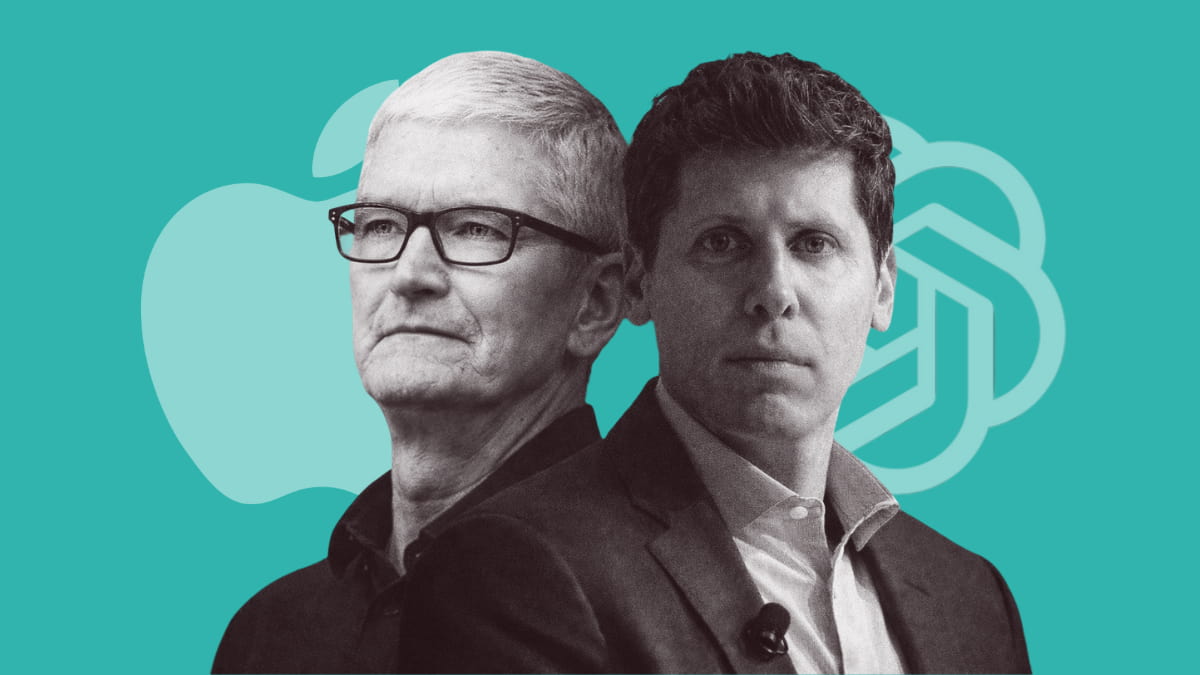

OpenAI was supposed to become part of the iPhone experience. Apple would finally have an AI answer for Siri. ChatGPT would sit in front of hundreds of millions of users.
It didn’t work out that way.
According to Bloomberg, OpenAI has brought in outside legal counsel to explore its options, including a formal breach-of-contract notice against Apple. The integration that was supposed to funnel billions in new subscriptions toward ChatGPT instead got buried deep enough that most iPhone users probably don’t know it exists. One OpenAI executive put it plainly: “They basically said, ‘OpenAI needs to take a leap of faith and trust us.’ It didn’t work out well.”
Table of Contents
ChatGPT got onto the iPhone. Almost nobody noticed
When Apple announced the ChatGPT integration at WWDC 2024, it looked like a genuine win for OpenAI. ChatGPT would live inside Siri and power Apple’s Visual Intelligence feature, putting it in front of hundreds of millions of iPhone users by default. For a company that built its growth on web traffic and app downloads, that kind of embedded distribution was hard to pass up.
OpenAI expected billions. The iPhone is the most attractive platform for consumer software growth, and being baked into the operating system is as close to a guaranteed audience as you get. What OpenAI got instead, per Bloomberg, was an integration that was hard to find, features that were difficult to surface, and revenue nowhere near what either side projected.
Apple’s side of it
Apple isn’t sitting quietly either. The company has its own grievances, concerns about OpenAI’s privacy standards, and irritation over OpenAI’s push into hardware, an effort led by former Apple design chief Jony Ive. Apple doesn’t appreciate a partner it helped legitimize turning around and competing in territory Apple considers its own.
You May Like: OpenAI’s Daybreak Wants to Fix Vulnerabilities Before Hackers Exploit Them
The Google move
While OpenAI was waiting for the integration to deliver, Apple was having a different conversation entirely. Earlier this year it struck a separate AI infrastructure deal with Google, paying roughly $1 billion annually to power Apple Intelligence with Gemini models.
Think about what that means for a second. Apple chose to pay its oldest rival a billion dollars a year rather than deepen its relationship with the company already living inside its operating system. OpenAI didn’t get replaced outright, the ChatGPT integration technically still exists but when your partner is cutting nine-figure checks to someone else, the message isn’t subtle.
For Google, it’s a remarkable turnaround. The two companies have been rivals since Android launched in 2008. For Apple, it’s a purely transactional move. Gemini gives them what they need without the complications that apparently came with OpenAI. For OpenAI, it’s the part of this story that stings most.
This isn’t the first time Apple has done this
It’s worth remembering that OpenAI is not the first major software company to learn this lesson the hard way. Google Maps was a flagship feature of the original iPhone. Apple pulled it in 2012, replaced it with its own markedly inferior product, and issued a rare public apology when the fallout was bad enough. Google and Apple eventually found their way back to each other, Google is now paying Apple billions annually to remain the default search engine but the dynamic never really changed. Apple’s platform, Apple’s rules.
Adobe found out too. Steve Jobs refused Flash on the iPhone and iPad, published an open letter explaining why, and Flash never recovered on mobile. Spotify spent years fighting Apple over App Store rules that disadvantaged rival music apps after Apple Music launched, eventually winning a nearly €1.8 billion fine from the European Commission.
The pattern is consistent. Apple embraces partners when it needs them and makes things difficult when it doesn’t.
You May Like: OpenMythos: The Closest Thing to Claude Mythos You Can Run (And It’s Open Source)
Where this leaves OpenAI
Any formal legal action would likely wait until OpenAI’s ongoing trial with Elon Musk concludes. But the mobile distribution problem doesn’t go away in the meantime.
ChatGPT is the most recognized AI brand in the world and it still couldn’t get traction inside the iPhone. That’s the uncomfortable part of all this.
OpenAI is expanding Codex to iOS and Android, building out its own mobile presence the hard way, but getting developers to monitor coding agents remotely is a different challenge than getting everyday iPhone users to reach for ChatGPT over whatever Apple puts in front of them by default.
Apple has the platform. It has Google’s money and Gemini’s models. And it has a long history of making things very difficult for guests who overstay their welcome.