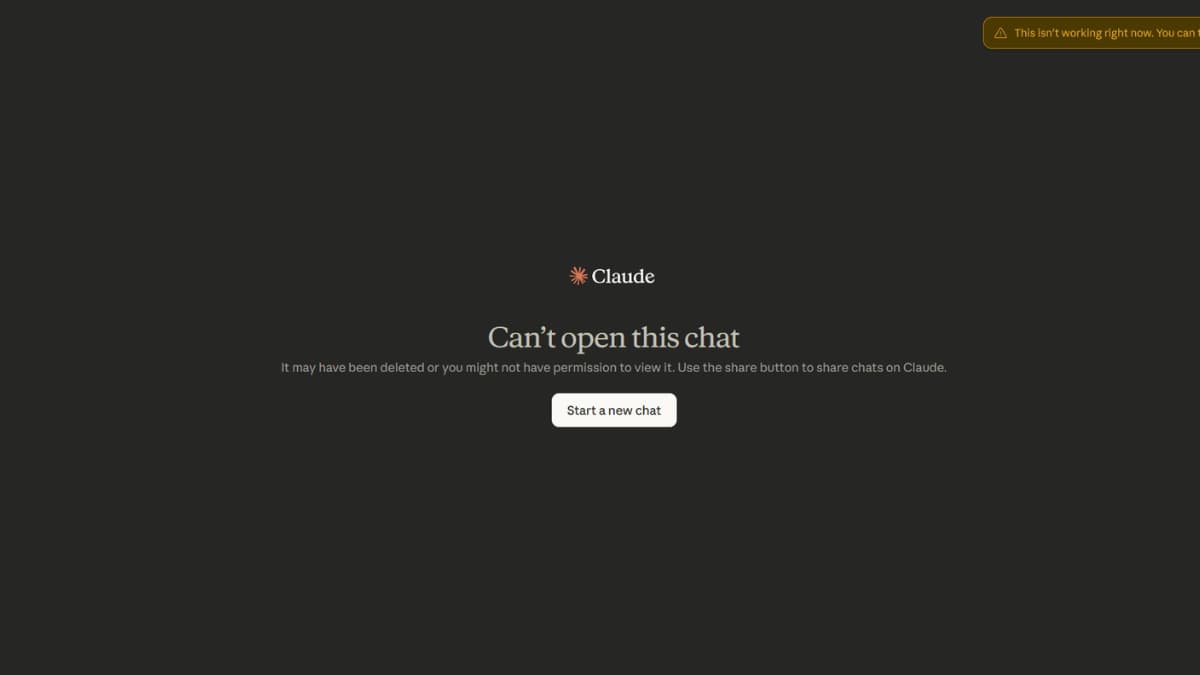

If you tried using Claude today and got hit with errors, timeouts, or blank responses, it’s not just you.
Claude is currently experiencing a major outage. The issue was first flagged on March 2, 2026, and it appears to be affecting users across web, mobile, and API access. This isn’t a small regional hiccup or a single app glitch. It’s broad.
According to the official status updates, the first “Investigating” notice went live at 11:49 UTC. A follow-up at 12:06 UTC confirmed the team is still looking into it. No resolution time has been shared yet.
For now, users may see failed requests, inconsistent replies, or complete inability to access the service. Developers relying on Claude’s API are also reporting elevated error rates.
And yes, this is happening worldwide.
What Anthropic has officially confirmed
Anthropic has acknowledged a service disruption affecting Claude.
The status page notes “elevated errors on claude.ai.” That usually means the system is responding, but not reliably. Some requests succeed. Others fail. That explains the mix of login errors, timeouts, and half-loaded responses users are seeing.
At first, reports suggested the issue was limited to the main web interface. API access and Claude Code appeared unaffected. Later, Anthropic confirmed there were authentication issues impacting Claude Code as well.
So this isn’t just a cosmetic web glitch. It touches multiple parts of the ecosystem.
What they have not shared:
- The root technical cause
- Whether it’s infrastructure or deployment related
- An ETA for full restoration
For now, the only clear message is that engineers are investigating.
Also Read: I Use Claude Code But Not for My Personal Projects — Here’s What I Use Instead
Why Claude is Down?
There’s no confirmed technical explanation yet. Anyone claiming certainty right now is guessing.
Large AI systems like Claude rely on several layers working together: model servers, routing systems, authentication services, and cloud infrastructure. If one critical component fails, errors can cascade quickly.
The HTTP 500 errors users are reporting usually signal server-side failures. A 529 error often points to overloaded or unavailable backend services. That could mean traffic spikes, internal misconfiguration, or cloud-level instability. It could also be something much more mundane, like a bad deployment.
We simply don’t know yet.
What stands out is the geographic spread. Reports are coming from multiple regions, which suggests a centralized or widely shared service component is affected rather than a local network issue.
Also Read: Industry-Grade Open-Source AI Video Models That Look Scarily Realistic
The API loophole
While the main claude.ai web interface is experiencing elevated errors, the core Claude API appears to still be operational for many users. That means developers using the API directly may still be able to send and receive requests, depending on the specific authentication flow.
If the website login is failing, you can try:
- Accessing the Claude Developer Console (if your session is still active)
- Using third-party platforms like Poe that integrate Claude models
- Running existing API keys through backend integrations
In other words, Claude isn’t completely offline at the model level. The disruption appears to be hitting the web interface and certain authentication paths harder than the raw model endpoints.
That’s an important distinction.
When will Claude be back up?
Sometimes outages like this resolve within an hour. Sometimes they stretch longer if the issue involves deeper infrastructure fixes. Until Anthropic posts a “Monitoring” or “Resolved” update, users should expect intermittent failures.
If you rely on Claude for work, this is one of those moments that reminds you to have a backup plan.