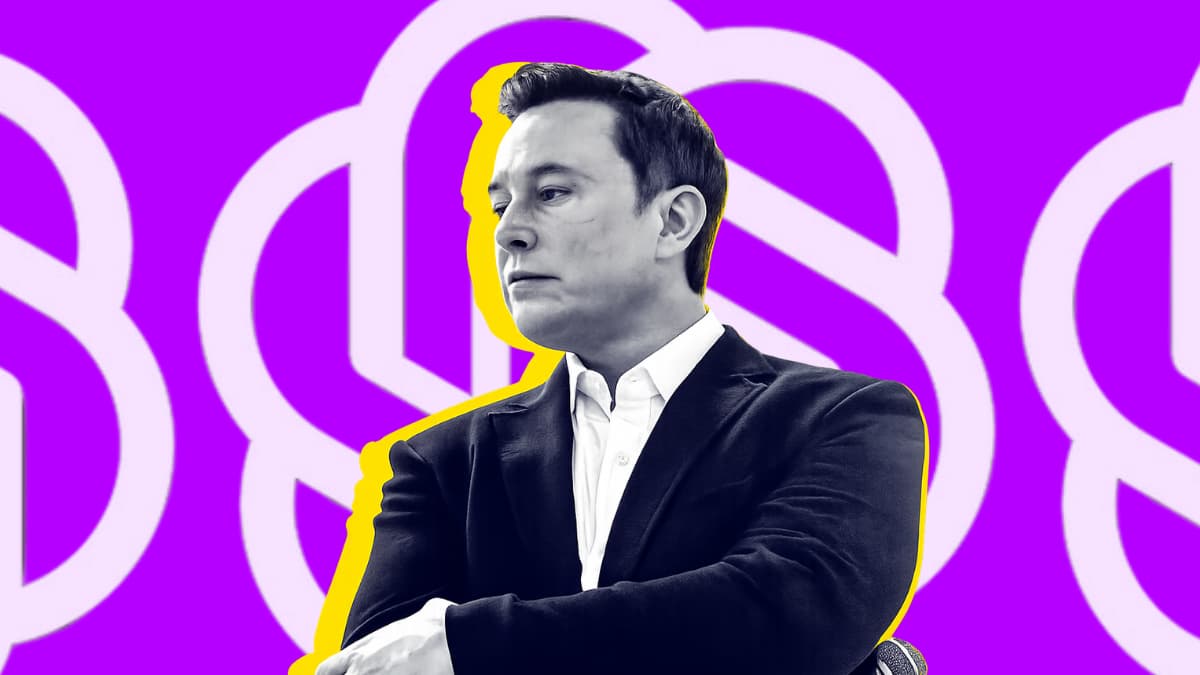

Elon Musk spent months in a California courtroom trying to prove that Sam Altman stole a charity. He got nine jurors, weeks of testimony from some of the biggest names in Silicon Valley, and a front row seat to the most revealing airing of OpenAI’s founding history ever put on public record.
Then the jury came back in under two hours and told him he’d filed too late.
Not that he was wrong. Just that whatever happened between them and Musk, the legal clock had already run out before he decided to do something about it. The question of whether OpenAI actually betrayed its founding mission, the question that made this case worth following in the first place never got answered.
Table of Contents
How it ended
The trial spent weeks digging through the melodramatic founding history of OpenAI, featuring testimony from some of the most recognizable names in Silicon Valley. Musk accused Altman and Brockman of effectively stealing a charity, taking a nonprofit AI lab built on his donations and transforming it into a for-profit entity that enriched its founders at the expense of its original mission.
The jury never ruled on whether that actually happened.
OpenAI’s defense leaned heavily on a statute of limitations argument that whatever harms Musk claimed to have suffered occurred before the legal deadlines for filing his charges. The specific cutoff dates varied by count but the core argument was the same throughout: Musk knew about these alleged wrongs years before he sued and waited too long to act.
The jury found that persuasive. Judge Yvonne Gonzalez Rogers, who had been presiding over the case, didn’t seem surprised. “There was a substantial amount of evidence to support the jury’s finding, which is why I was prepared to dismiss on the spot,” she said after the verdict.
OpenAI’s lead attorney Bill Savitt was less measured. “It did not take them two hours to conclude that Mr. Musk’s lawsuit is nothing more than an after-the-fact contrivance that bears no relationship to reality,” he said outside the courthouse. “This lawsuit is a hypocritical attempt to sabotage a competitor.”
You May Like: Anthropic’s Mythos Just Helped Find macOS vulnerability That Could Break Apple’s Security Protections
What the jury actually decided
The verdict doesn’t mean OpenAI acted properly. It means a jury decided that Musk’s legal claims were filed outside the window the law allows.
The substance of those claims whether OpenAI’s shift toward a for-profit structure betrayed its founding charitable mission, whether Musk was misled about the direction the organization would take was never adjudicated. The judge noted the damages discussion, which was happening in parallel to assess what Musk would have been owed if he’d won, was now moot. But even that discussion suggested the numbers Musk’s team put forward were disconnected from reality. His expert had estimated OpenAI and Microsoft’s wrongful gains at Musk’s expense somewhere between $78.8 billion and $135 billion. The judge told that expert directly: “Your analysis seems to be devoid of connection to the underlying facts.”
Musk’s own response on X after the ruling inadvertently made the procedural point clear. “There is no question to anyone following the case in detail that Altman and Brockman did in fact enrich themselves by stealing a charity,” he wrote. “The only question is WHEN they did it.”
He’s framing a procedural loss as a moral victory. But he’s also not wrong that the jury’s verdict leaves the underlying question unanswered. Whether OpenAI betrayed its founding mission remains, legally speaking, an open question, just one that this particular case never got to resolve.
What this clears for OpenAI
OpenAI has been operating with this lawsuit hanging over it for months. One of the more serious threats it posed was the possibility of a forced restructuring, a court potentially intervening in OpenAI’s ongoing conversion from nonprofit to for-profit at exactly the moment the company is trying to get that done cleanly ahead of a reported IPO.
That threat is now gone. The restructuring can proceed without a court second-guessing it. Microsoft, which Musk had also sued for aiding and abetting OpenAI’s alleged breach of charitable trust, welcomed the verdict and said it remained committed to its work with OpenAI. For a company that has billions tied up in that relationship, a clean exit from this litigation was the best possible outcome.
OpenAI’s attorney called it exactly what the company wanted people to hear, a hypocritical attempt to sabotage a competitor, kicked to the side where it belongs.
Musk’s response
Musk posted on X that the verdict was essentially a procedural dodge, the jury answered when, not whether. He said he’s filing an appeal with the Ninth Circuit, framing it around what he calls a dangerous precedent for charitable giving in America.
The appeal is his to file. Whether it lands differently than a unanimous jury verdict is another question entirely.
What’s harder to argue is that the outcome changes anything material for OpenAI. The one scenario that genuinely threatened the company’s near-term plans, a court-ordered intervention in its nonprofit-to-for-profit conversion is off the table. Everything OpenAI wants to do next, it can now do without a courtroom weighing in.