
For years, there was a strange contradiction at the heart of one of Android’s most privacy-focused alternatives: if you wanted to get away from Google’s software, you generally had to buy a Google phone.
GrapheneOS has largely been tied to the Pixel because Google’s hardware has provided the security features the project needs to build its hardened version of Android. It was an engineering compromise, not exactly an endorsement of the Google ecosystem.
Now, that compromise may finally be ending.
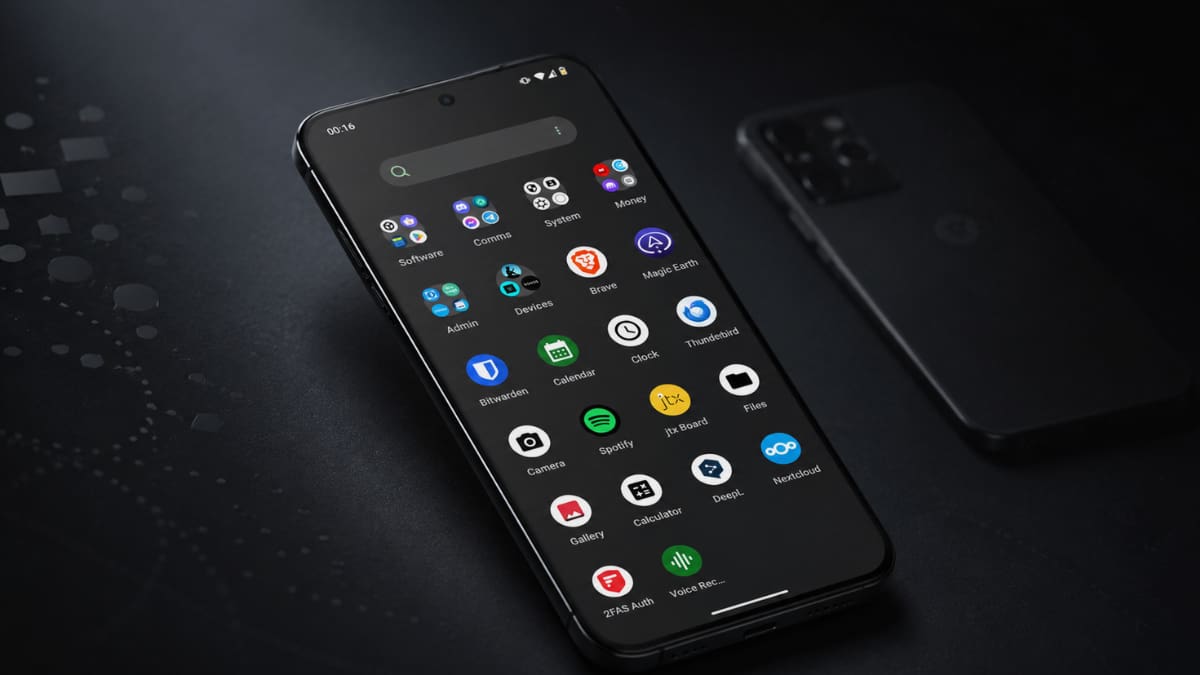
Motorola and the GrapheneOS project are working together on a new generation of Motorola phones that are expected to support GrapheneOS in 2027. For the first time, the project is preparing to expand beyond Pixel hardware with support from another major smartphone maker.
That sounds like a simple hardware partnership.
It isn’t.
Because getting GrapheneOS onto another phone isn’t as easy as installing a different operating system. The hardware underneath has to meet a demanding set of security requirements and that creates an unexpected problem for anyone hoping for a cheap, privacy-focused phone.
Table of Contents
GrapheneOS In a Nutshell
GrapheneOS is an open-source operating system based on Android, built with a much stronger focus on security and privacy than standard Android.
Instead of replacing Android with an entirely different mobile platform, it takes the familiar Android foundation and hardens it. It adds additional security protections, gives users more control over app permissions and network access, and keeps apps more isolated from one another.
It can also run Google’s own apps and services, but with an important difference: on GrapheneOS, Google Play is treated as ordinary sandboxed software rather than being given the privileged system-level access it has on a typical Android phone.
That makes GrapheneOS particularly interesting to people who want an Android phone without having to accept the same level of trust in Google’s software ecosystem.
For years, however, there was a catch.
You generally needed a Google Pixel to run it.
GrapheneOS Is Finally Leaving the Pixel
For years, GrapheneOS had a very short answer when someone asked which phones they could use it on: Pixel.
That wasn’t because the project had some particular attachment to Google’s phones. Pixel hardware simply met the project’s security requirements in ways that most other Android devices didn’t.
Now, that’s changing.
Motorola announced a long-term partnership with the GrapheneOS Foundation in March, with both sides saying they would work on future devices that meet GrapheneOS’s privacy and security standards. The latest update from GrapheneOS puts the first supported Motorola devices on track for 2027, with the initial lineup expected to consist of flagship phones.
And there’s an important distinction here, these phones aren’t simply Motorola devices that happen to let you install a custom Android ROM. Motorola is working with GrapheneOS to make the hardware officially supported by the project.
That matters because GrapheneOS has historically been extremely selective about the hardware it supports. Its requirements go deeper than having a fast processor or an unlockable bootloader. The underlying device needs the right security features, hardware capabilities and long-term software support for the project to maintain its security model.
Motorola is therefore doing more than adding another phone to a compatibility list.
It’s giving GrapheneOS a way out of its Pixel-only world And that raises an obvious question: Why was Pixel hardware so important in the first place?
Why Pixel Was So Important?
Simply because the operating system’s security doesn’t stop at the software.
GrapheneOS has a strict set of requirements for the hardware underneath it. The device needs to provide modern hardware-backed security, a secure boot process, reliable protection against attempts to extract data from a locked phone, and enough long-term support from the manufacturer to keep those protections intact.
Google’s Pixel phones happened to check those boxes.
That includes features such as Verified Boot, which helps ensure the software running on the device hasn’t been tampered with, and hardware-backed mechanisms that protect sensitive cryptographic keys and limit attempts to guess a device’s unlock credentials.
More recently, Pixel hardware has also provided memory tagging, a processor-level security feature that GrapheneOS can use to detect certain classes of memory-safety vulnerabilities.
These aren’t features GrapheneOS can simply recreate in software.
If the underlying hardware doesn’t provide the necessary security primitives, there is a limit to how much an alternative operating system can do to compensate.
That’s why the Pixel requirement was never really about Google.
It was about finding a phone whose hardware gave GrapheneOS enough security building blocks to maintain its own standards.
And this is exactly why Motorola’s arrival is more significant than it first appears. The challenge is more than just booting GrapheneOS in Motorola phones. Its finding Motorola hardware that is secure enough to deserve official support.
But Privacy Has a Hardware Price
If you were hoping this partnership would finally produce an affordable $200 or $300 privacy-focused phone, the first generation is going in the opposite direction.
GrapheneOS says its initial Motorola devices are expected to be high-end flagships arriving in 2027, and they are likely to cost even more than comparable Pixel phones.
That sounds strange at first.
Motorola already makes plenty of inexpensive Android phones. Why not put GrapheneOS on one of those?
Because the processor inside the phone matters just as much as the operating system running on it.
The cheaper tiers of Qualcomm’s Snapdragon platform don’t currently provide the same combination of hardware security capabilities and long-term support that GrapheneOS requires. The project’s developers have specifically pointed to the higher-end Snapdragon 8-series hardware as the level currently capable of meeting those requirements.
One important example is Memory Tagging Extension (MTE), a hardware security feature that can help detect certain classes of memory-safety vulnerabilities. The relevant hardware support is currently concentrated in Qualcomm’s highest-end silicon.
Then there’s another less glamorous requirement: time.
GrapheneOS needs manufacturers to provide sufficiently long security and firmware support. A cheap phone that stops receiving important updates after a couple of years isn’t much use to an operating system whose entire purpose is to maintain a strong security baseline.
So Motorola can’t simply take an existing budget Moto G, install GrapheneOS on it and call it a privacy phone.
The hardware has to be built around the security requirements first.
And that creates a somewhat uncomfortable reality:
Mobile privacy isn’t just a software problem. It has a hardware price floor.
For now, that price appears to be flagship territory.
You May Like: Cursor Origin Doesn’t Want to Replace GitHub. (Yet.)
What Changes When GrapheneOS Has a Choice?
For users, the biggest change may not be the Motorola phone itself.
It’s the fact that GrapheneOS could finally have another hardware platform to work with.
That’s important because relying on a single manufacturer creates a strange kind of bottleneck. Even if the software is open source, the hardware underneath it isn’t. If Google changes its hardware strategy, stops making a particular device, or changes how long it supports older models, GrapheneOS users have relatively few alternatives.
Motorola doesn’t solve that problem overnight. The first devices are still years away, and the initial models are expected to be expensive flagships.
But if the partnership works, it gives the project something it hasn’t really had before: competition on the hardware side.
And that could make privacy-focused Android more interesting to people who aren’t already deep into the GrapheneOS community.
Today, choosing GrapheneOS also means choosing a fairly specific kind of phone. In the future, the decision could look more like a normal smartphone purchase: Which hardware do you prefer? Which price makes sense? Which manufacturer has the support you want?
That’s a much healthier position for any open-source project to be in.
It could also put pressure on other manufacturers. If Motorola proves there is a market for premium phones designed to meet serious privacy and security requirements, other companies may have a reason to build hardware that can support similar operating systems.
None of that is guaranteed.
Motorola still has to deliver the hardware, GrapheneOS still has to approve it, and users will have to decide whether the privacy benefits justify the price.
But for the first time, the path away from Google’s software may not have to begin with a trip to Google’s hardware store.
You May Like: Best Open Source AI Assistants You Can Run Locally
A Different Future for Android
GrapheneOS has spent years building around one hardware platform. Motorola gives it a chance to prove that the software can stand on its own across manufacturers.
If the partnership succeeds, it could open the door to a broader mobile privacy ecosystem which gives users more hardware choices while giving GrapheneOS room to grow beyond the Pixel Phone.
For a project built around giving users more control, having more than one choice of hardware feels like a pretty fitting next step.