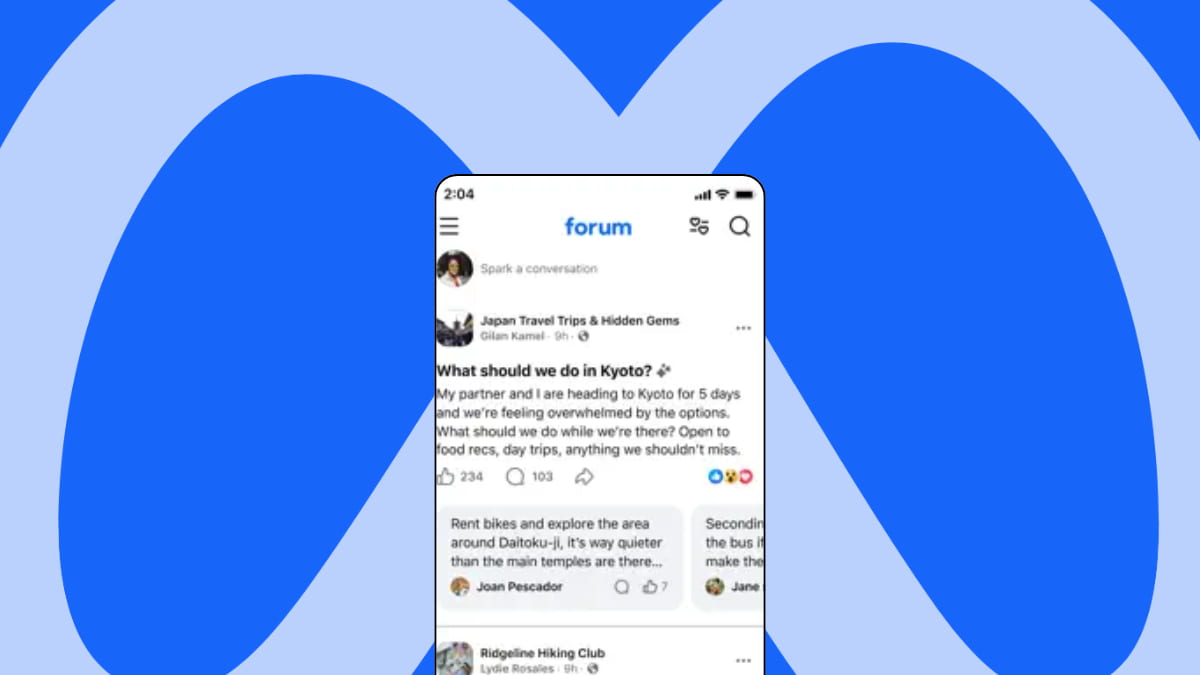

Meta launched a new standalone app called Forum this week, and the easiest way to describe it is: Facebook Groups trying to become Reddit.
The app revolves around discussions instead of algorithmic feeds. Users can post with nicknames, follow conversations across communities, and use an AI-powered “Ask” feature that pulls answers from discussions happening in different groups. Meta says the goal is helping people see “what real people are saying, not just what’s trending.”
A few years ago, this probably would have looked like another random Meta side project destined for the company’s graveyard of abandoned apps. Right now though, the timing feels more interesting.
Social platforms are running into a weird problem in the AI era. Feeds are getting flooded with synthetic content, engagement bait, AI generated replies, and recommendation systems that increasingly feel detached from actual human conversation. At the same time, places built around real discussions, Reddit, Discord communities, niche forums, even group chats, suddenly feel more valuable again.
And now Meta, the company that spent years optimizing social media around scale and algorithmic feeds, is building a product around smaller communities and conversation quality instead.
Why Meta is doing this now
For years, the dominant social model was simple: giant feeds, recommendation algorithms, short viral posts, endless scrolling. Platforms optimized for reach and engagement because that is what kept people inside the app longest.
But the experience has started breaking down a bit. Feeds across almost every major platform increasingly feel stuffed with reposted content, AI generated junk, rage bait, and accounts farming engagement instead of saying anything useful. Even platforms powered by sophisticated recommendation systems can start feeling strangely empty after a while.
That is part of why Reddit has become more important during the AI boom. People still go there because they want answers from actual humans, especially on niche topics where AI summaries tend to flatten nuance or hallucinate details. Google itself has basically trained users to add “Reddit” to searches because forums often feel more trustworthy than SEO pages now.
Meta seems to understand that change. Forum’s entire pitch revolves around conversations, communities, and “real answers from real people”. It sounds like a company trying to rebuild some of the internet behaviors social media platforms gradually optimized away.
You May Like: Elon Musk Lost His OpenAI Lawsuit. The Bigger Question Was Never Put to the Jury
What Forum is
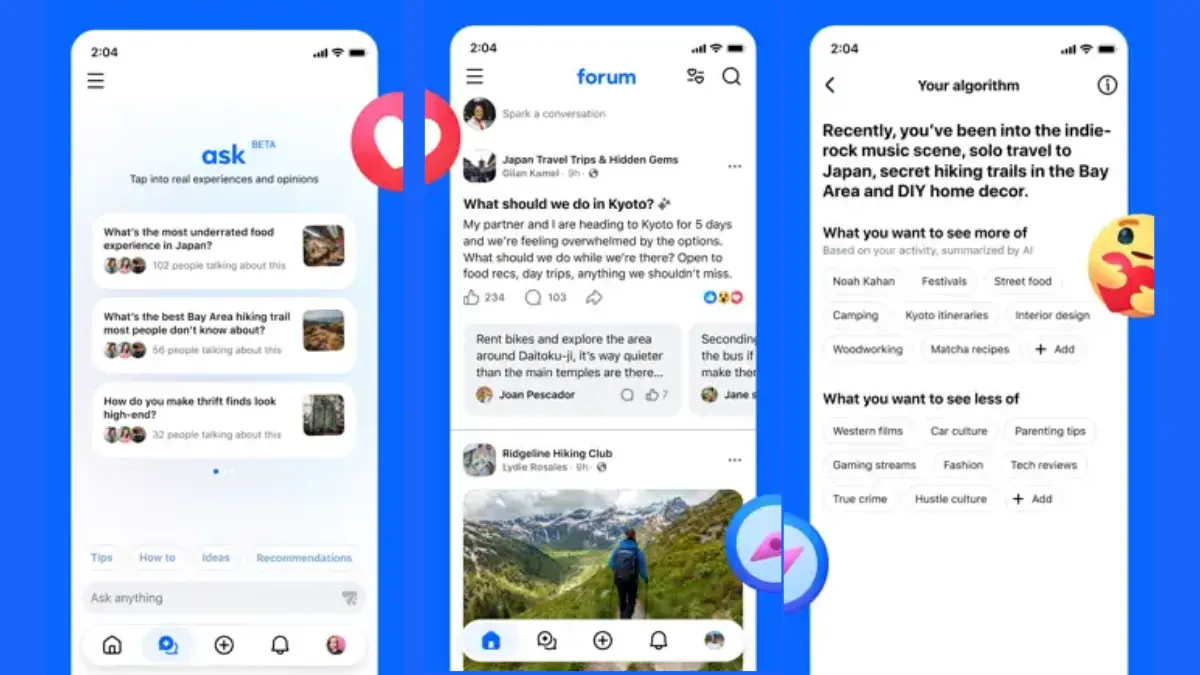
Forum is essentially a standalone layer built on top of Facebook Groups.
When users sign in, the app imports their existing groups, activity, and profile data from Facebook. Posts made inside Forum still appear back inside the connected Facebook groups, so this is not a separate social network as much as a different interface for interacting with communities.
The design leans heavily into discussion threads instead of traditional feed scrolling. Users can post under nicknames, browse conversations across groups, and jump back into ongoing discussions more easily than inside the main Facebook app.
Meta also added AI almost everywhere it could.
There is an AI-powered “Ask” tab that lets users search for answers pulled from discussions happening across groups. Group admins also get an AI moderation assistant to help manage communities and filter content. So while Forum markets itself around “real people,” the platform is still deeply wrapped around AI systems underneath.
That contradiction is kind of the point of modern social platforms now. Companies are trying to use AI to organize and summarize human conversation while simultaneously fighting the ways AI can make those same conversations feel fake.
The weird reversal happening in social media
The bigger question here is how much this product clashes with Meta’s own history.
Facebook spent the last decade pushing toward massive algorithmic feeds where content from strangers often mattered more than posts from actual communities. The company rewarded scale, virality, creators, and recommendation systems because that model drove growth better than slower discussion spaces ever could.
Now Meta is shipping an app built around smaller groups and threaded conversations instead. That is a pretty dramatic reversal, even if the company would never frame it that way publicly.
And Meta is not alone. Across the industry, platforms increasingly seem worried that giant AI amplified feeds are making social apps feel less social. Reddit keeps growing in relevance because people still trust messy human discussions more than AI generated summaries. Discord communities remain sticky for the same reason. Even group chats have started replacing public posting for a lot of users.
The irony is that Silicon Valley spent years trying to scale human conversation into infinite feeds, and now some of the biggest companies in tech seem to be rediscovering why smaller communities worked in the first place.
The AI contradiction and the harder problem for Meta
What makes Forum interesting is that Meta clearly understands people are looking for more human spaces online again. The strange part is that the company is trying to solve that problem with even more AI layered into the experience.
Forum’s “Ask” feature uses AI to summarize discussions across communities. Admin tools rely on AI moderation systems. The app talks constantly about helping users find “real answers,” while also filtering those answers through machine generated systems in the background.
That tension is probably going to define the next phase of social platforms. Companies want AI to organize conversations without making those conversations feel synthetic. Whether users actually trust that balance is another question.
Meta also has another problem here: community products are not just feature problems. They are culture problems.
The company already tried a standalone Groups app once back in 2014 and shut it down a few years later. And building something that technically resembles Reddit does not automatically recreate what made Reddit valuable in the first place. A lot of people use Reddit specifically because it does not feel tied to their real identity or connected to Facebook’s ecosystem.
That may be the hardest thing for Meta to replicate. Still, Forum says something important about where social platforms think the internet is heading next. After years of chasing bigger feeds and algorithmic scale, some of the largest tech companies suddenly seem interested in smaller conversations again.