



WordPress has a problem it cannot fix from the inside. Not a performance problem. Not a features problem. A structural one. 96% of its security vulnerabilities come from plugins, and the reason is simple. Every plugin gets access to everything. The database, the filesystem, the entire execution context. That is how it was built in 2003 and that is how it still works today.
Cloudflare looked at that and decided patching was the wrong answer. EmDash is their attempt to start over. Built in TypeScript, Its serverless & powered by Astro & MIT licensed. No PHP, legacy architecture or plugins that can silently access your entire database.
I want to be straight about what this is right now. It is a v0.1.0 developer preview. You are not migrating your production site today. But the architecture decisions behind it are serious enough that if you build on WordPress, run a plugin business, or host WordPress sites for clients, you should understand what Cloudflare just shipped.
Table of contents
What EmDash actually is?
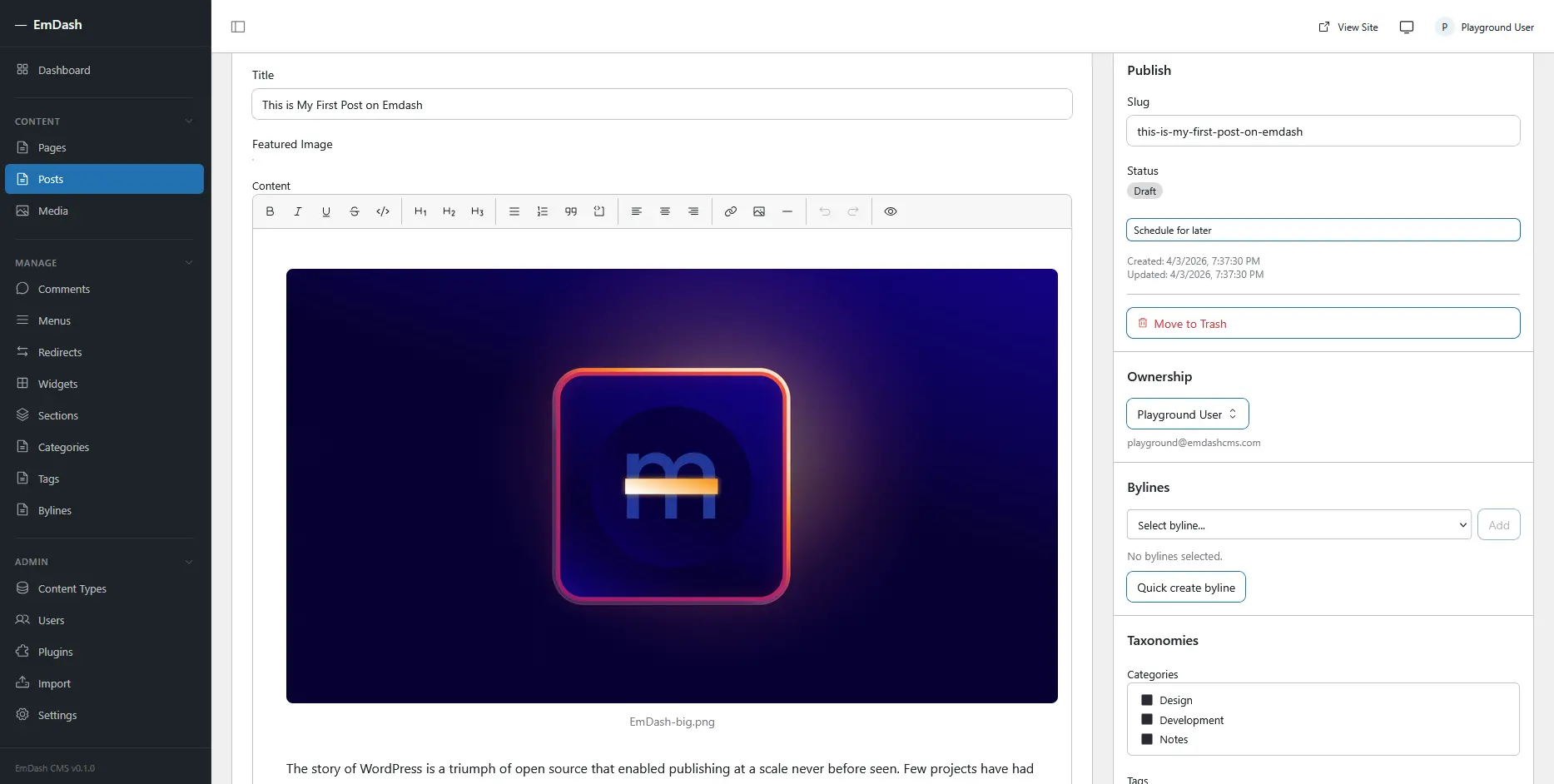
EmDash is a CMS written entirely in TypeScript, serverless by default, powered by Astro under the hood. It is MIT licensed & fully open source. You can deploy it to Cloudflare in one click or run it on any Node.js server you already have. No PHP. No legacy architecture carrying two decades of decisions made when AWS EC2 did not exist yet.
Cloudflare is calling it the spiritual successor to WordPress. That is a big claim for a v0.1.0 preview. But the architecture decisions behind it are not marketing. They are solving problems WordPress structurally cannot solve without breaking everything built on top of it. The plugin problem is where that starts.
The plugin problem and how EmDash actually fixes it
Every WordPress plugin is a PHP script with direct access to your database and filesystem. When you install a plugin you are trusting that its author handled every edge case, every malicious input, every security scenario perfectly. Most of the time that trust is misplaced.
That is not a solvable problem inside WordPress. The architecture is 24 years old. Fixing it would break every plugin ever written.
EmDash starts from scratch and the difference is immediate. Every plugin runs in its own isolated sandbox. Instead of handing the plugin keys to everything, EmDash asks the plugin to declare upfront exactly what it needs. Read access to content. Permission to send email. Access to one specific hostname. Nothing else.
It works like OAuth. Most developers already understand this pattern. When you connect a third party app to your Google account, you see a screen listing exactly what it is asking for. Read your calendar. Send email on your behalf. You approve or you do not. EmDash plugins work the same way at install time.
A plugin that notifies editors when a post goes live needs two things: content:afterSave to hook into the publish event, and email:send to fire the notification. That is all it gets. It cannot touch your database. It cannot make external network requests unless it explicitly declared a specific hostname it needs. The plugin could have ten thousand lines of code and it still cannot do anything outside those two declared capabilities.
This also breaks the stranglehold of the WordPress plugin marketplace. WordPress.org manually reviews every plugin because the security risk of unreviewed plugins is genuinely dangerous. That review queue currently sits at over 800 plugins and takes at least two weeks. EmDash does not need that gate because the sandbox makes the risk manageable without a centralized approver.
Related: Open source AI agentic models built for real autonomous work
Built for a web where humans & agents browse
WordPress was built for humans with browsers. That was the right call in 2003. It is a liability now.
EmDash does not replace the human experience. Your readers still visit, read, and subscribe the same way. But EmDash is also ready for what WordPress is not: AI agents browsing, fetching, and paying for content on behalf of users.
Every EmDash instance ships with a built-in MCP server, a CLI your agents can talk to directly, and x402 payment support baked into the core.
x402 is an open standard for internet-native payments. When an agent hits a paywalled page it receives a 402 Payment Required response, pays on demand, and gets through. No subscription flow. No human in the loop. You set a price, add a wallet address, done.
The web’s ad model was built around humans seeing ads. That breaks when the visitor is an agent. EmDash treats that as a core infrastructure problem, not an afterthought.
The WordPress migration path
If you are already on WordPress, getting your content into EmDash is straightforward. Export a WXR file from your WordPress admin and import it directly. If you want something cleaner, install the EmDash Exporter plugin on your existing site. It sets up a secure endpoint, protected by a WordPress Application Password you control, and the migration takes a few minutes.
Media comes across automatically. Custom post types built with plugins like Advanced Custom Fields can be mapped to proper EmDash collections during import, each stored in its own table rather than squeezed into WordPress’s posts table like they were never meant to be there.
What does not migrate is your theme. EmDash themes are Astro projects. If your current theme is heavily customized, rebuilding it is real work. That is the honest cost of switching and worth factoring in before you get excited about everything else.
Is it actually ready
No. And Cloudflare is not pretending otherwise. EmDash is v0.1.0 preview. It is an early developer beta. You should not migrate a production site today. The plugin ecosystem does not exist yet. The theme library is essentially empty. You are looking at a foundation, not a finished house.
But the foundation is serious. The architecture decisions are not cosmetic. Sandboxed plugins, agent-native infrastructure, serverless by default, MIT licensed. Many of these are not things you can retrofit into WordPress. They required starting over.
Cloudflare building this matters too. This is not a solo developer’s side project that might disappear in six months. The same company running the infrastructure for a significant portion of the internet decided WordPress’s core problems were worth solving from scratch.
Watch it. Try the playground. If you build plugins or themes professionally, now is the right time to pay attention. Production use can wait.