

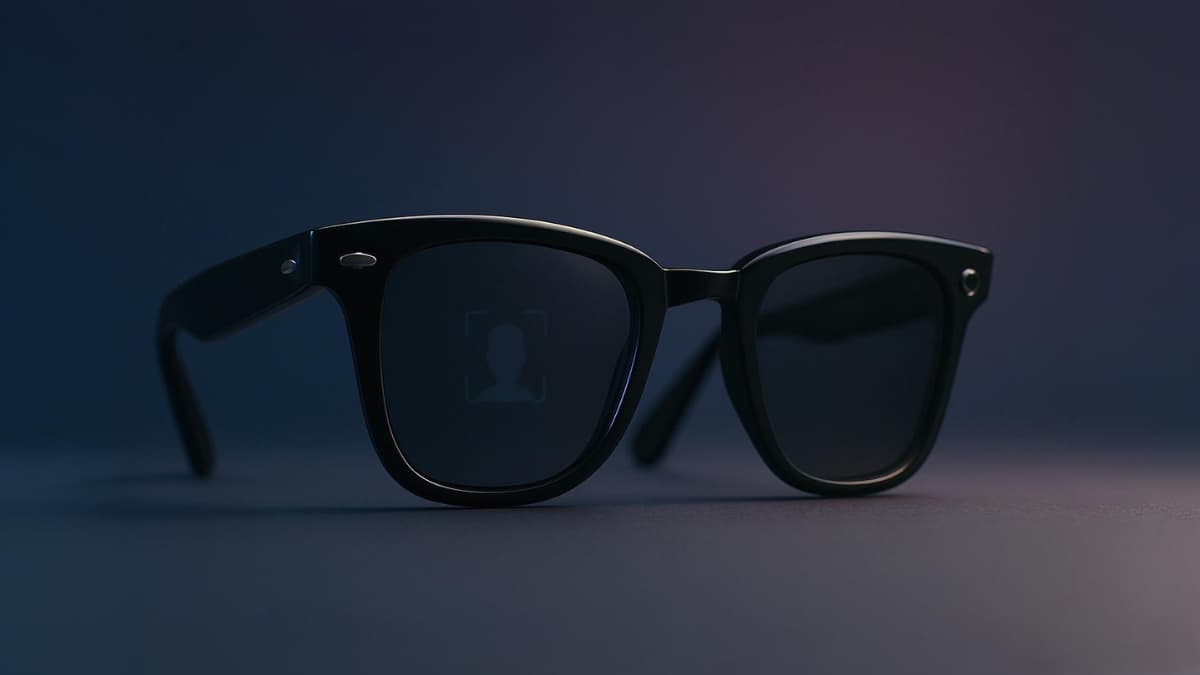

Imagine You’re standing in line for coffee. Someone looks at you & their glasses quickly pull up your name and maybe your Instagram.
You never gave permission & never even knew it was possible. That’s the idea behind “Name Tag,” a feature being tested by Meta for its Ray-Ban smart glasses. According to The New York Times, the glasses would scan faces and match them to social profiles in real time.
I’ll be honest. Part of me thinks the tech is impressive. The other part finds it deeply uncomfortable.
Because once facial recognition moves from your phone into everyday glasses, the rules change. Your face stops being just your face. It becomes searchable.
Meta says this kind of tech would have limits. There would be controls. But here’s what keeps bothering people: most of us did not sign up to be identified by strangers in public.
That’s the tension. The company frames it as innovation. Critics call it surveillance. The truth probably sits somewhere in between.
When Your Face Becomes Searchable
For most of internet history, you had to choose to be searchable.
If smart glasses can scan a face and pull up a profile, then being searchable is no longer something you actively do. It just… happens. You walk into a room and someone else’s device does the work.
In the past, facial recognition mostly lived inside your phone. It unlocked your screen, sorted your photos. It worked in the background for you.
Now imagine it working for a stranger.
Maybe it helps someone remember your name at a networking event. That’s the optimistic version.
But there’s another version. Someone sees you on the train. At a protest. Outside your workplace. They get your name in seconds. Maybe more.
Meta will likely say there are limits, Opt-outs, Rules about how the system works. And to be fair, those controls do matter. Companies cannot just release raw facial recognition into the world without guardrails.
Still, even with controls, the feeling changes. Public used to mean anonymous. Not invisible, but unindexed.
When faces become searchable, anonymity shrinks enough that people start to notice.
What Data Could Actually Be Pulled?
Right now, there is no public technical breakdown of how “Name Tag” would work or exactly what it would show. That matters. A lot of this is based on reports, not official product documentation.
But let’s think this through logically. If a system is matching a face to a social profile, what does a typical public profile contain? Usually:
- Profile name
- Profile photo
- Profile bio
- Sometimes workplace or school
- Sometimes links to other accounts
That alone is not nothing.
Even a name plus a photo can be enough to search further. Add a short bio and it becomes easier to place someone. Where they work or Who they know.
Now, to be fair, this would likely rely on public or shared data. Not private messages or locked content. Companies are careful about that line.
But the uncomfortable truth is, Many people forget how much of their information is already public. We post casually, tag locations. Over time, small details stack up. Facial recognition does not create that data. It just makes finding it easier so it really depends on how much of our data is public.
Also Read: ‘Don’t Shut Me Down’: As Claude 4.6 Launches, a Viral ‘Blackmail’ Safety Test Resurfaces
So where does this leave us?
I don’t think this is the moment where privacy suddenly disappears. But it might be one of those shifts we only understand later.
The technology will keep moving forward & Companies will test the limits.
If this feature actually launches, we’ll see what options are offered. Maybe there will be clear opt-outs. Maybe there will be limits on what can be shown or the rollout will look very different from what people fear right now. We don’t fully know yet.
What we do know is, once something becomes normal, it rarely feels strange anymore.