

Last week an AI startup called Higgsfield announced it had premiered a fully AI-generated feature film at Cannes. The Wall Street Journal covered it. The founder posted on LinkedIn that “for decades, Cannes has been the room where new cinema gets legitimized.” The story spread fast.
There was one problem. Cannes said it never happened.
According to Futurism, which reached out to festival organizers directly after failing to find the film on the official Cannes schedule, a festival spokesperson confirmed that “Hell Grind was not screened as part of the official Festival de Cannes program.” The film was presented during an industry event organized by third parties in Cannes. That’s a meaningfully different thing and the distinction matters because the entire credibility of the announcement rested on the Cannes name.
It’s a clean example of how AI hype gets manufactured and how quickly it travels before anyone checks.
What Hell Grind actually is
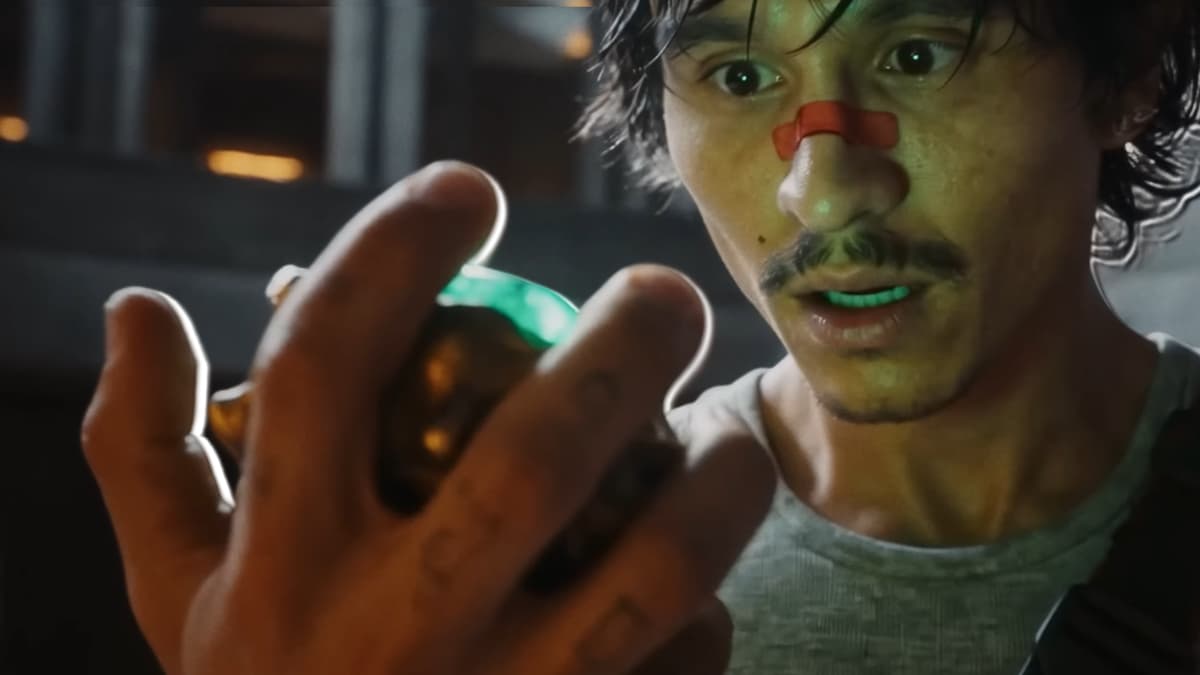
Higgsfield, a San Francisco startup valued at $1.3 billion, made a 95-minute action film called Hell Grind in two weeks using AI video generation tools including Google’s Veo 3. Total cost was $500,000. Of that, $400,000 went to compute costs, which tells you something about where AI filmmaking economics currently sit.
The film follows four street thieves whose heist goes wrong when an ancient artifact pulls one of them into the underworld. It’s campy, action-heavy, and exactly the kind of spectacle you’d expect from a proof-of-concept designed to sell Hollywood studios on AI video tools rather than win awards.
The technical process was more involved than the “just prompt an AI” framing suggests. Each prompt averaged 3,000 words. Every generation produced about 15 seconds of footage which then had to be generated multiple times with tweaks to get a usable shot. The first 25 minutes of the film required 16,181 initial video generations that became 253 final shots. Maintaining visual consistency across a feature-length film is genuinely hard with current AI tools and the team had to build detailed style prefixes into every prompt defining lighting, camera type, physics behavior, and more to avoid the over-lit artificial look that gets dismissed as slop.
“You can’t go into AI and say make me a 95-minute cool video,” said Adil Alimzhanov, a content lead at Higgsfield. That’s honest and worth crediting. The work was there even if the marketing around it wasn’t.
How the Cannes claim fell apart
The venue where Hell Grind screened was the Marché du Film, which has a business relationship with the Cannes Film Festival but operates as a separate commercial marketplace with no meaningful selection process. It will screen any film that pays the fee. It has screened Sharknado. Calling it a Cannes premiere is roughly equivalent to buying an ad in the New York Times and describing yourself as a Times journalist.
When Higgsfield’s founder posted on LinkedIn implying the film had premiered at Cannes proper, a director named John Washburn replied directly. “This isn’t screening at the Festival de Cannes, which is what you’re implying. The suggestion that paying for a screening at some random theatre in the same town and at the same time as a major festival is somehow the same thing as being selected by that festival is misleading at best. Spurious bullshittery, really.”
Higgsfield later defended itself by saying the Marché du Film was an accredited component of the Cannes ecosystem. That’s technically true in the same way that a hotel gift shop is part of the hotel ecosystem. The Wall Street Journal’s original article made no mention of the Marché du Film and left readers with the clear impression the film was part of the festival proper. The paper later added a correction at the bottom of its original story clarifying the film screened at the Marché du Film, not the official festival program.
The pattern this fits into
Hell Grind isn’t an isolated case. It’s a chapter in a longer story about how AI companies build credibility through association.
Earlier this year a video of Tom Cruise and Brad Pitt fighting on a rooftop went viral for its apparent AI-generated quality, with people declaring it proof that Hollywood was finished. It turned out to be an AI reskin of existing footage of two human performers in front of a green screen. The underlying capability was real but the demonstration was theater.
The Cannes situation follows the same structure. The underlying capability is real. Higgsfield did make a feature-length AI film and the technical challenges they solved are genuine. But the claim that it premiered at Cannes was designed to attach prestige that the work hadn’t earned through the process that prestige is supposed to represent.
Demi Moore said at the festival that AI is here and fighting it is a battle that will be lost. Tilda Swinton said AI doesn’t have a chance. Guillermo Del Toro said something considerably more direct to thunderous applause. The debate at Cannes was real and substantive. Hell Grind was adjacent to it geographically and nowhere near it in terms of what the festival actually validated.
The $500K budget and two-week production timeline are striking numbers if they’re accurate. Given the marketing around the screening it’s reasonable to hold them loosely until independently verified.